


Which Car Window Shades Are Actually Safe to Use?

Safe car shades actually need to do two things: block harmful UV, and stay legal and safe to drive with. Most buyers only think about the first one.
This guide covers both, so you know exactly which Snap Shades products you can drive with, which are for parked use only, and how to tell a genuinely safe shade from a risky one.
What Actually Makes a Car Shade "Safe"?
A safe car shade needs to do two things at once: protect against UV and heat, and never block your view of the road, your mirrors, or a passenger's visibility out the window.
A shade that nails the first but fails the second isn't safe; it's a hazard. That's the trap with some reflective or ill-fitting shades sold online.
The Legal Side: What Road Rules Actually Say
Every Australian state bases its road rules on the Australian Road Rules, the model framework set by the National Transport Commission.
The core principle that applies everywhere: a driver must have a clear, unobstructed view of the road, traffic, and mirrors at all times.
In practice, that means anything covering your windscreen or blocking your side mirrors has to come off before you drive.
Rules on window tinting and shading do vary slightly by state, so check your own state's transport authority (for example, Transport for NSW's guide to legal windows and tinting) if you're ever unsure.
Snap Shades' Range: What's Safe to Drive With
Not every shade in the Snap Shades range is meant for the same use. Here's the breakdown:
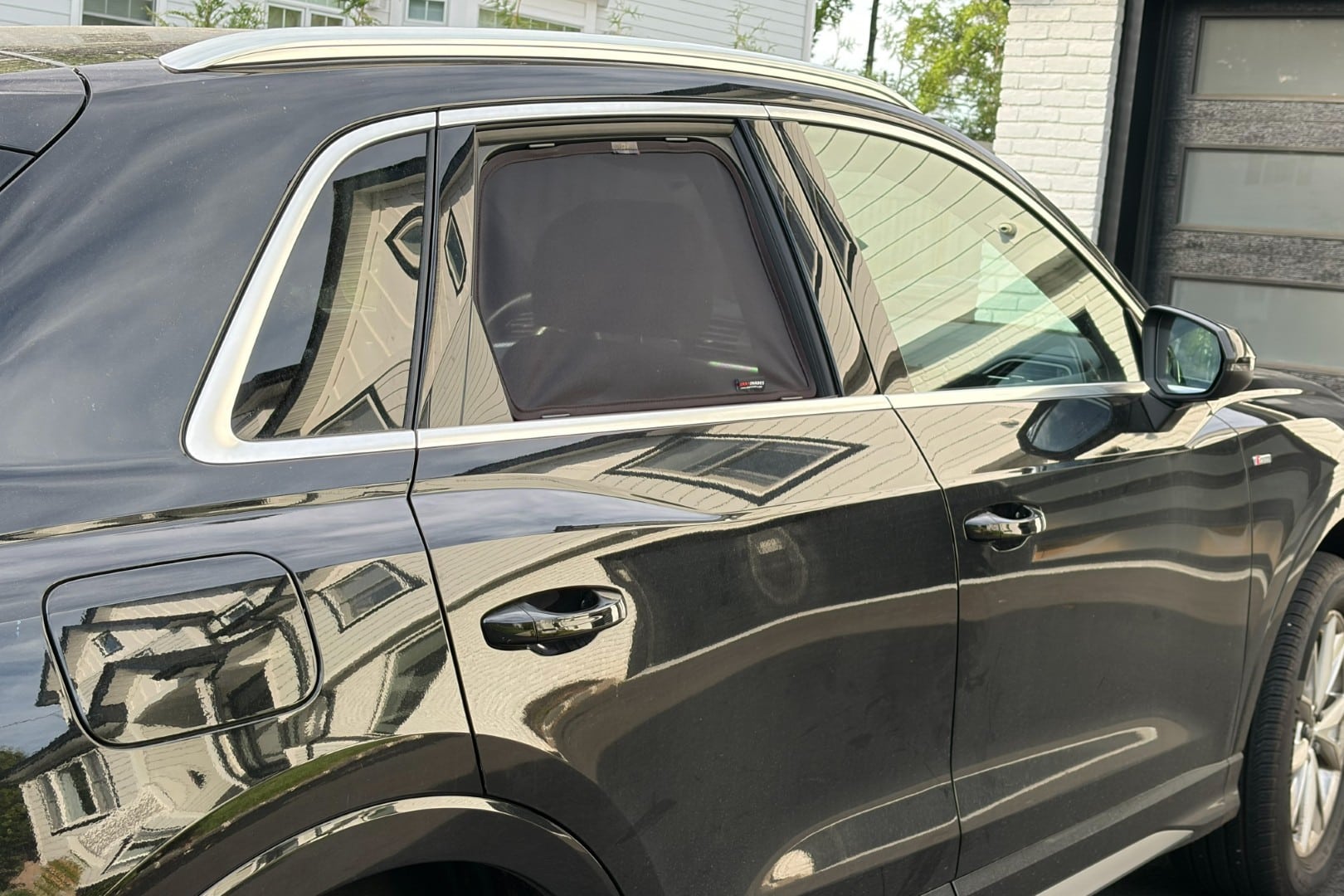
- Side window and rear window shades: designed for driving. Snap Shades' own guidance is to keep speeds under 70km/h if you've got the window down about halfway with a shade fitted, and the mesh is perforated so it never blocks your blind spots.
- Sunroof shades: also fine to leave in while driving, since they sit above the driver's line of sight.
- Front windscreen shades: for parked use only. Always remove it before you start driving, since it sits directly in your line of sight.
Side window, rear window, and sunroof shades all fall into the "safe to drive with" category. Only the front windscreen shade needs to come off first.
Front Windscreen Shades: A Different Kind of Safety
Parked-car heat is its own safety issue, not just a comfort one. A hot cabin is dangerous for kids and pets left even briefly, and it accelerates wear on your dash and seats.
This is exactly where a front windscreen shade earns its keep. Snap Shades' front windscreen shade reduces interior vehicle temperature by up to 15°C and interior surface temperature by up to 45°C.
Just remember: it's a parked-car tool. Take it off before you drive, since it sits directly in your line of sight through the windscreen.
UV Protection Without the Trade-Offs
A shade that blocks your view isn't worth the UV protection it offers. Snap Shades' side and rear window shades are built to avoid that trade-off entirely.
- 84.6% UVA/UVB block, independently tested by ARPANSA (the Australian Radiation Protection and Nuclear Safety Agency)
- See-through mesh: passengers and following drivers can still see through, unlike a solid blackout panel
- Custom-fit, not stretched: cut for your exact vehicle, so it sits flush against the frame instead of flapping or slipping loose
- No tools required: the smart magnet system snaps into place in seconds
Every shade is also backed by a 1-year fabric warranty against UV-related cracking, splitting, or tearing.
Simple Rules to Stay Safe and Legal
- Keep your windscreen and mirrors clear: never drive with anything covering them.
- Side, rear, and sunroof shades are fine while driving: as long as they don't block your blind spots.
- Front windscreen shades are for parking use only: remove before you start the car.
- Check your fit: a loose or ill-fitting shade that flaps or slips is a distraction, not a safety feature.
Frequently Asked Questions
Yes. Custom-fit side and rear window shades are designed for driving, as long as they don't block a mirror or your view.
No. Front windscreen shades are for parked use only, and must be removed before you drive, since they sit directly in your line of sight.
Snap Shades recommends keeping speeds under 70km/h if the window is down about halfway with a shade installed.
No. Removable shades aren't a permanent modification, so they don't affect roadworthy inspections the way permanent window tint can.
They can be, if left in place while driving or if they're bulky enough to block your blind spots. Stick to shades designed and fitted for the specific window they're covering.
Look for an independently tested figure, not just a "UV protected" label. Snap Shades' side and rear window shades are tested at 84.6% UVA/UVB block by ARPANSA.
Side, rear, and sunroof shades can generally stay in place, since they don't affect your forward view.
Ready to Shade Your Car Safely?
Skip the guesswork and shop Snap Shades' full range of custom-fit, ARPANSA-tested shades built for your exact vehicle.